
On October 22, 2025, Almaty Management University (AlmaU) hosted the AlmaU Impact Forum in partnership with the SDG Alliance, dedicated to the 80th anniversary of the United Nations (UN).
The Forum has become an expert platform for discussing practical aspects of integrating the principles of the Sustainable Development Goals (SDG) and the ESG agenda into the higher education system, corporate governance and urban development. The forum was attended by representatives of more than 20 universities in Kazakhstan, heads of educational organizations, researchers, experts in the field of ESG, representatives of the private sector, NGOs and international institutions. The forum's program combined three key areas – education, sustainable development and urbanism. The organizers were: Institute of International Relations, Institute of Urban Studies, Tolyq Adam, Institute of Education.
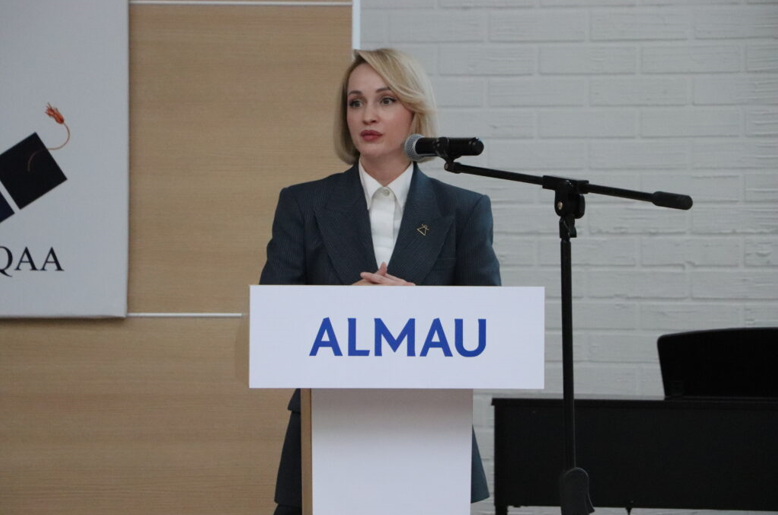
The forum was opened by a member of the Executive Committee of the IAUP (International Association of University Presidents), founder and rector of AlmaU Asylbek Kozhakhmetov, stressing that sustainable development is not a fashion, but a principle embedded in the mission of the university.:
"For AlmaU, sustainable development is not a trend or a fashion. This is our value compass. This is a fundamental norm embedded in the very mission of our entrepreneurial university – to have a real impact on the development of the economy and society. True transformation occurs only when the academy, the government and the private sector work as a whole. The time has come to build a New Central Asia, a region that can and should become an epicenter of creative, ethical, and sustainable leadership."
Continuing this thought, Vlastimil Samek, representative of the UN Department of Global Communications and Head of the UN Information Office in Kazakhstan, noted the importance of moving from declarations to actions.:
"Living sustainably doesn't have to be fashionable, it has to be lived. We are a little behind on the trajectory of the SDGs until 2030, but Kazakhstan demonstrates its desire to develop the impact and deepen international cooperation."
Zoya Kasenova, a representative of the SEC Almaty, continued her welcoming speech, emphasizing the role of the city as a driver of environmental and social development.:
"Almaty is becoming a center for shaping a strategic agenda in the field of sustainable development, eco-friendly thinking and a culture of responsibility. The task of the SEC is to create conditions for sustainable development, from ecological transport to participation in projects like today's forum."
Vadim Tsurikov, Director of Research and Innovation at SDG Alliance, added:
"Sustainable development is no longer abstract – it's about concrete actions and measurable results. By implementing SDG and ESG principles, we are shaping a generation of leaders for whom sustainability is the norm."
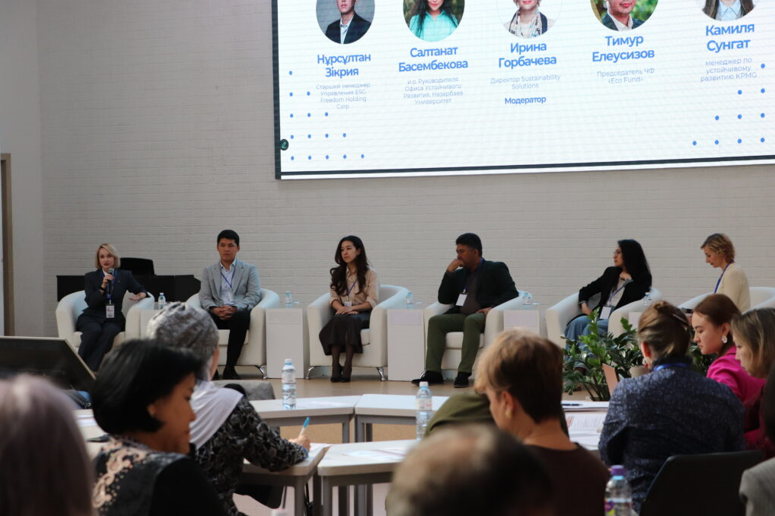
Within the framework of the forum, three panel discussions were held, bringing together leading experts and practitioners from various fields. The first session, "Sustainability: a new Fashion or a new norm?" moderated by Irina Gorbacheva, Director of Sustainable Solutions, brought together representatives of consulting, education and the corporate sector.
The panel session was attended by:
Kamilya Sungat– KPMG Sustainability Manager
Saltanat Basembekova – Acting Head of the Office of Sustainable Development, Nazarbayev University.
Timur Eleusizov – Chairman of the Black Sea Fund "Eco Fund"
Nursultan Zikria is a Senior Management Manager at ESG Freedom Holding Corp.
According to Kamili Sungat (KPMG), the drivers of ESG are both external factors - the expectations of investors, the state and society – and internal factors: corporate culture, values of shareholders and employees.
"In addition to financial indicators, non–financial, environmental and social aspects are becoming increasingly important. They are the ones that shape the reputation and sustainability of companies in the long term," she stressed.
Timur Eleusizov, Chairman of the Black Sea Fund Eco Fund, added that sustainability should be manifested in real actions, not declarations.:
"By 2027, it will be difficult for many companies to remain on the market due to non-compliance with global environmental requirements. True sustainability is the ability to work even in the absence of external financing. This requires specialists who are able to implement the principles of the SDGs and ESG in corporate practice."
The logical continuation of the topic was the second panel discussion – "Urban experiments in achieving sustainable development", where issues of urban policy, transport infrastructure and ecosystem solutions were discussed.
The session was attended by :
Ivan Ryaposov, research fellow at the AlmaU Institute of Urban Studies
Zarina Dauletkan – Director of the AlmaU Institute of Urban Studies
Dinmukhamed Ushpaev – Transport Analyst, Future of Mobility, graduate of AlmaU
Madina Dzhunusova is a researcher at the Institute of Public Administration and Politics at the University of Central Asia.
Marlis Linke – Head, Representative Office of the Rosa Luxemburg Foundation in Central Asia
Roman Barabanov is an expert on urban mobility
Marklis Linke noted that a sustainable city is not only about ecology, but also about the quality of life.:
"Urban spaces should provide opportunities for work, education and recreation, creating a comfortable environment for all categories of citizens."
Zarina Dauletkan, Director of the AlmaU Institute of Urban Studies, shared the university's experience:
"We are developing the Urban Studies and City Management educational program, where students work with real urban cases. Our Green and Safe Streets project, which won a prize at Tomorrow City Shanghai, demonstrates how infrastructure solutions affect the ecology and quality of the urban environment."
The third session, "Education with an Impact: How to shape Generations, Changing society", focused on the role of educational institutions in shaping sustainable thinking. The moderator was Sholpan Tazabek, Vice Rector for Global Partnership at AlmaU.
The following participated in the discussion:
Assel Tasmagambetova is the founder of the Sh. school.Ualikhanov; Aigul Sarenova- Director of the Tolyq Adam Institute; Camila Rolland- PhD, Head of the Department of Inclusive Education at SDU; Aidar Kazybayev – Founder and Chairman of the Board of Directors of the Global ESG Partnership; Marzhan Tajieva – Project manager of Turn It Around CCE CapsUnlock.
According to Asel Tasmagametova, sustainable thinking needs to be formed from childhood.:
"We conduct workshops on SDGs for elementary grades, explaining to children why it is important to save resources and protect nature. For example, my daughter knows her goal – SDG No. 6 "Clean water and sanitation" – and is already consciously saving water."
The forum concluded with a poster session, where student initiatives aimed at solving environmental and social problems were presented. The young participants showed that impact begins with personal responsibility and concrete actions, not with loud slogans.
Thus, the AlmaU Impact Forum in partnership with the SDG Alliance has become an important step in strengthening partnerships between universities, businesses, government agencies and the research community.
The Forum showed that sustainable development is not a temporary trend, but a new norm shaping a future in which science, education and society work together to create an environmentally friendly, just and inclusive world. It is important to note that students from the Institute of International Relations actively volunteered at the forum.