

November 13, 2025

SDGs Almaty – defeating poverty, diseases, and achieving equality

150 NGO initiatives across 26 SDG targets totaling 9.36 billion tenge – what is the outcome?

When one hears the expression “sustainable development,” it often seems like something distant – conferences, reports, and grand statements. Yet in reality, it is much simpler. It is about a normal quality of life: when the air is clean, public transport functions properly, and the environment does not become a luxury.

The Sustainable Development Goals (SDGs) are a plan adopted by the world in 2015. Prior to that, there were the Millennium Development Goals, which focused on combating poverty, diseases, and inequality.

It later became clear that these issues alone were insufficient. Without justice, environmental protection, technology, and transparent institutions, no development is possible.

This is how the 17 Sustainable Development Goals emerged. They include: the eradication of poverty and hunger, quality education, equal opportunities, clean energy, sustainable cities, innovation, ecosystem protection, and peaceful societies.
All these goals are interconnected. The main idea is not simply to grow, but to grow in a way that improves people’s lives rather than making them worse.

Almaty: the first city to test the SDGs in practice

In 2024, Almaty became the first city in Kazakhstan to assess how the global sustainable development goals can be implemented in practice. This is how the Voluntary Local Review (VLR) emerged – a document compiling data on which municipal programmes are genuinely aligned with the SDG targets.

It was prepared by the Almaty city development Centre with the support of UNDP and the participation of experts, civil society organizations, and research institutions.

The key feature of this review is not its status but its approach. Instead of dry numbers, it focuses on concrete areas: transport, environment, education, and employment. Essentially, it is not a report prepared merely for the sake of form, but a planning tool. It helps identify which solutions truly improve people’s lives and which merely create the appearance of progress.

And already a year later, Almaty moved to the next level, becoming the United Nations Regional SDG centre for Central Asia and Afghanistan.

If the VLR represents an internal assessment – a way for the city to evaluate itself and its achievements – the new centre serves as a platform where Almaty shares its experience and helps neighbouring countries move in the same direction. It is now here that regional initiatives on environmental protection, inclusion, digitalization, and sustainable growth will be discussed and coordinated.

Thus, Almaty is gradually transforming from an example of localized solutions into a pivotal point in the international agenda – a city where sustainability is increasingly embedded in concrete, practical action.

Almaty through the SDG perspective: where the city’s pain points are

When Almaty is viewed through the SDG perspective, it becomes evident that many urban challenges have already been identified, but their resolution is progressing unevenly.

Below are only a few examples of problems that are directly related to the Sustainable Development Goals, but are still being addressed not very effectively.

SDG No. 3 – Good Health and Well-Being

Almaty steadily ranks among the ten most polluted cities in the region. More than 80% of emissions come from transport, and PM2.5 levels exceed WHO standards several times over. As a result, the number of respiratory and cardiovascular diseases is increasing.

SDG No. 11 – Sustainable Cities and Communities

The city is growing faster than its infrastructure. The average traffic speed is about 25 km/h, while there are more than 400 cars per 1,000 residents. New districts suffer from a shortage of public transport, lighting, and well-maintained courtyards.

SDG No. 10 – Reduced Inequalities

An accessible environment is developing slowly: only one-third of bus stops and about 40% of social facilities are adapted for persons with disabilities.

SDG No. 6 – Clean Water and Sanitation

Some suburban areas still do not have connection to centralized water supply and sewage systems, and network deterioration reaches 60%.

SDG No. 7 and No. 13 – Clean Energy and Climate Action

Almaty still depends on coal, especially at CHP-2. The transition to gas is slow, expensive, and requires an infrastructure overhaul. This results in smog and chronic illnesses familiar to every resident in winter.

SDG No. 12 – Responsible Consumption and Production

The city produces around one million tonnes of waste annually, but only 8% is recycled. Waste sorting is available only in certain districts, and most enterprises operate at minimal capacity.

SDG No. 9 – Infrastructure and Innovation

Worn-out utilities, constant excavations, and stormwater systems failing to cope with rainfall are typical. Instead of endless repairs, the SDGs encourage looking at the outcome: whether daily life has become more convenient.

SDG No. 4 and No. 8 – Education and Labour

Young specialists often cannot find employment in their profession, while the low-skilled sector is overloaded. This affects social sustainability and creates distortions in the labour market.

SDG No. 16 and No. 17 – Institutions and Partnership

The issue lies in coordination. Roads, transport, urban improvement, and environmental matters are handled by different agencies, and few have a comprehensive view. The SDGs make it possible to build a system in which decisions are coordinated and aimed at one objective - improving quality of life.

Thus, the SDGs are not just an unfamiliar international abbreviation, but a way to bring order to urban priorities, to see where the system truly works and where everything relies on manual management. And most importantly, to understand that behind each of these goals stands not a number in a report, but the quality of life of a specific person.

Civil Alliance: how to explain the SDGs in simple terms

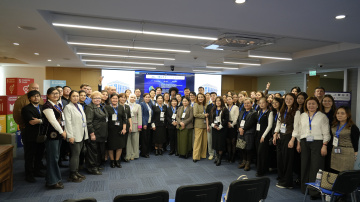
In Almaty, the promotion and public awareness of the SDGs is carried out by the city’s civil alliance. it conducts seminars and meetings for NGOs, civil society organizations, and political parties, explaining how to apply the SDGs in practice.

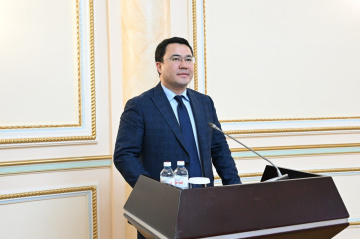
According to the Chair of the Alliance, Kairzhan Abdykhalykov, it is important that the SDGs stop being an “international agenda” and become a tool for Almaty residents themselves.

Here is an example of a concrete solution to an important urban issue:

“We achieved the organization of shuttle bus routes for children - free of charge, for students of public schools living in remote areas. They are brought to school in the morning and taken home after classes,” Abdykhalykov noted

Members of the Civil Alliance of Almaty on the SDGs are also working to ensure that the entire passenger transport system switches to gas by 2030. This is directly aligned with the Sustainable Development Goals.

The Alliance, together with experts, conducted an analysis of NGO projects implemented in 2024 and identified which of them correspond to the SDG targets.

The results are indicative:

150 initiatives across 26 SDG targets totaling 9.36 billion tenge;

  • 97 NGOs with an annual turnover exceeding 100 million tenge implemented 253 projects, mainly in the fields of environmental protection, education, and social support.
  • However, there is a problem - transparency. Out of one hundred large NGOs, only 41 publish open data.

The rest operate “in the shadows,” hopefully not out of ill intent but simply out of habit. As a result, their achievements are known to very few residents of Almaty; for the majority, they remain unknown.

As SDG expert Sergey Tsoy noted at the seminar, without open statistics it is impossible to understand who is truly driving change and what exactly they are doing.

In 2025, the Alliance plans to launch a unified online registry of NGO projects so that anyone can see who is working on what. This is an attempt not to tell but to show - who is actually delivering results and how.

Business: a practical interest in sustainability

For businesses, participation in the SDGs is no longer merely a fashionable gesture. It is part of the ESG logic - when environmental considerations (Environmental), social responsibility (Social), and responsible governance (Governance) become the norm rather than a PR tool.

There are already examples in Kazakhstan and specifically in Almaty:

  • KASE (Kazakhstan Stock Exchange) launched an ESG reporting platform and issued the first “green” and social bonds.
  • SEC “Almaty” received an international ESG rating and, for the first time, publicly disclosed its indicators on environmental performance, social policy, and governance.

For now, this is mostly a story of large companies and institutions. But it will not remain an “optional feature” for long. Banks and investors already require ESG disclosure from contractors and partners, meaning these principles will soon become the norm for small businesses as well. From construction and transport companies to cafés and developers - all will be forced to take into account environmental impact, inclusion, and transparency, because sustainability is gradually turning into a new language of the market.

ESG is, in essence, the practical dimension of the SDGs within the business sector.

And yes, all of this is commendable, but sustainability in Kazakhstan still relies on the enthusiasm of experts, activists, and select local administrations. For it to become a system, every official must ask a simple question when making a decision: does this improve citizens’ lives or not? Only then will the SDGs stop being a dull term from presentations and become part of real urban life.

How this will evolve in other cities of Kazakhstan is still unknown. Environmental issues, as well as inequality, exist practically in every region and city of our country. But for now, we do not even know the real scale of these problems, let alone their solutions.

Source:

https://ratel.kz/outlook/tsur_almaty_pobedim_bednost_bolezni_i_stanem_ravnymi

crossmenu